
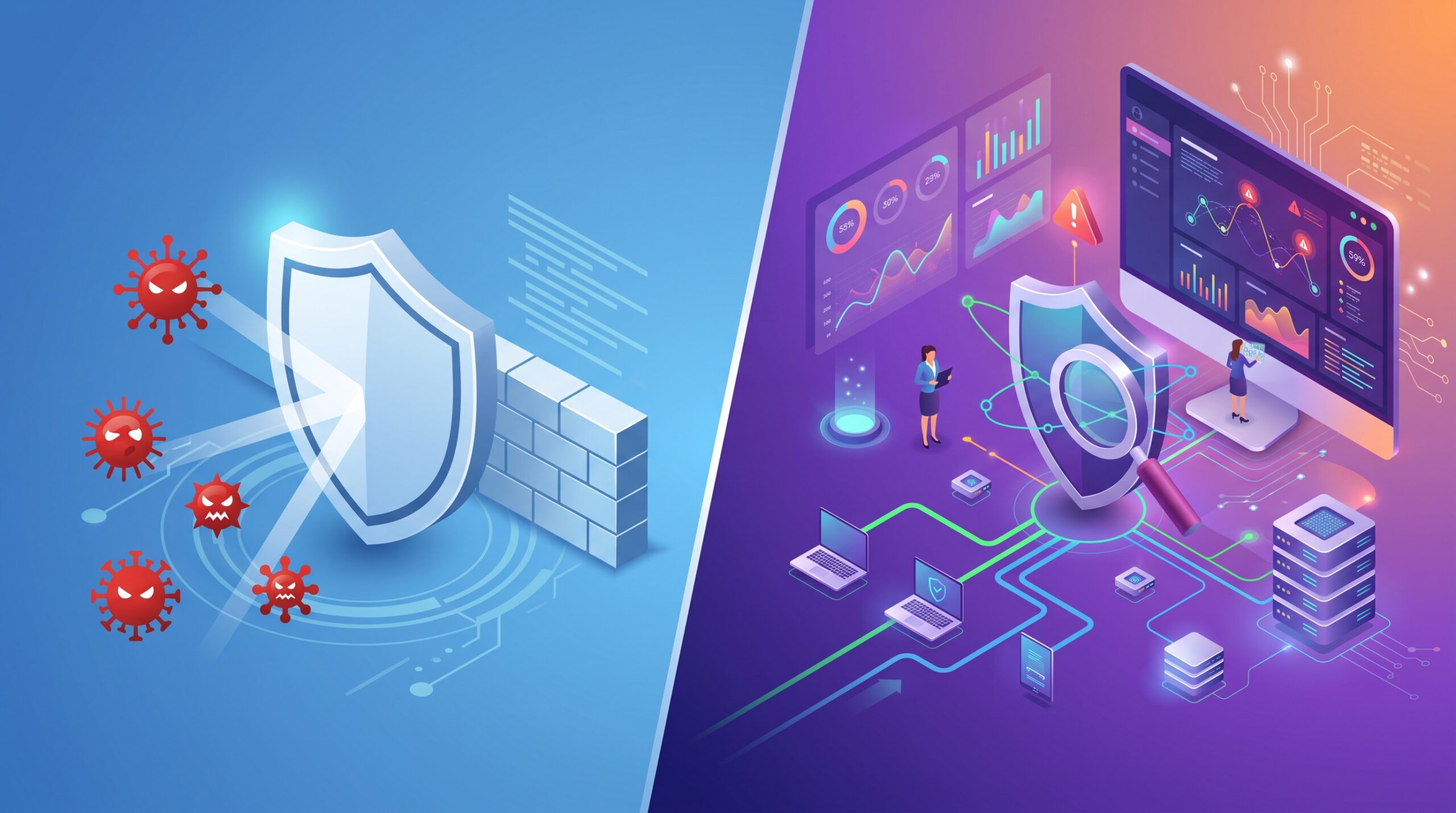
Antivirus and EDR capabilities overlap in modern security products. EDR adds endpoint activity visibility and response tools, but the practical choice should consider detection coverage, alert handling and the people responsible for investigation.
Assign response ownership
An alert has limited value without a person or service to triage it. Ask about monitoring hours, isolation authority and reporting.
Add supporting controls
MFA, timely updates, restricted admin rights, email protection and tested backups remain essential regardless of endpoint product.
Practical decision guidance
Ask how the product covers laptops away from the office, servers and unsupported operating systems. Confirm whether staff or a managed service will investigate alerts and who may isolate a device. Isolation can interrupt work, so response authority should be agreed in advance.
Applying this to your business
Illustrative incident: an unfamiliar script runs on a finance laptop. The business needs evidence about its activity, a way to contain it and a person to determine whether it is malicious. Buying a console without assigning that responsibility leaves an operational gap.
Before you proceed
- Inventory supported and unsupported endpoints.
- Agree alert hours and escalation.
- Review incident reports and missed coverage.
Request an endpoint security review from ITC Systems. Call 031 001 7028 or email [email protected].
Related service: https://itcsystems.co.za/cyber-security/
Related guide when published: https://itcsystems.co.za/blog/microsoft-365-phishing-protection/
CISA — StopRansomware Guide: https://www.cisa.gov/stopransomware/ransomware-guide